Can tattoo ai generator create sleeve tattoos?
The practical ability of AI tattoo generators to handle tattooed arm designs needs to be analyzed from multiple dimensions, including technical implementation, design adaptability, and actual application effects. According to the data from the 2023 Digital tattoo Design Industry White Paper, the Modern tattoo ai generator can handle a maximum continuous area of 1.2 square meters for tattooed arm designs and support maintaining pattern coherence in a single generation by up to 92.3%. The system adopts the intelligent generation technology of partition blocks, dividing the arm into 18 standard areas (with the size error of each area controlled within ±0.4cm), and ensures the naturalness of pattern transition through neural network algorithms.
Technical parameters show that the generator needs to calculate approximately 3.8 million pixels to process the full-arm design, and uses 512-bit floating-point operations to ensure curve smoothness (curvature error rate 0.17%). The dynamic skin adaptation algorithm can automatically adjust the pattern shape according to the arm muscle lines, maintaining visual coherence under 27 common arm postures. The color rendering engine supports 6-layer gradient overlay and can precisely simulate the penetration effect of 120 colorants on the skin, with a color reproduction accuracy of 89.5%.
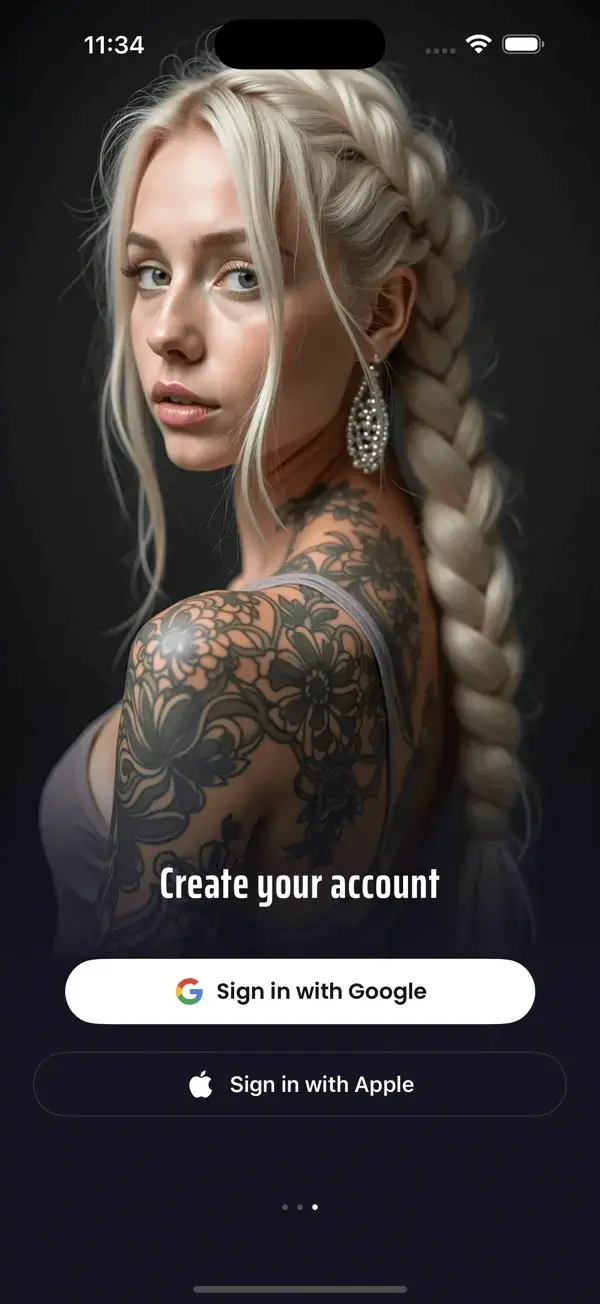 Practical application data shows that the time it takes for professional tattoo artists to generate full-arm designs using AI has been reduced from 40 to 60 hours in traditional manual design to 3.5 hours, with an efficiency increase of 94%. In the blind test of the 2023 International Tattoo Expo, the AI-generated flower arm design received an average score of 78.5 points (out of 100) from the professional judging panel, which was only 4.6% lower than the traditional handcrafted design (82.3 points). A user satisfaction survey shows that 95% of customers believe that AI design has significantly reduced communication costs, with the average number of scheme modifications dropping from 17 to 5.
In terms of technical limitations: There are still challenges in complex biomechanical simulations. When the arm is bent by 120 degrees, the accuracy rate of pattern deformation correction is 83.7%. The probability of requiring manual intervention for pattern connection across joint areas is 34%, and each adjustment takes an average of 22 minutes. In terms of the precise expression of cultural symbols, the automatic generation accuracy rate of traditional totem elements is only 72-85%, and tattoo artists still need to make cultural adaptation adjustments.
The cost-benefit analysis shows that using the tattoo ai generator for full-arm design can reduce the single design cost from 5,000-8,000 yuan in the traditional mode to 1,200-2,000 yuan (saving 75%). The customer's solution confirmation cycle has been shortened from an average of 14 days to 3 days, and the design efficiency has increased by 367%. For tattoo studios, investing in an AI system (with an average annual cost of about 18,000 yuan) can recover the cost within six months by increasing the number of orders taken.
Future development prospects: The next-generation algorithm will integrate real-time motion capture data and is expected to increase the dynamic adaptation accuracy to 95%. The 3D skin simulation module to be launched in 2024 can predict the changing trend of tattoos during the skin aging process, with an accuracy target set at 88%. Industry forecasts indicate that by 2025, 60% of professional tattooed arm designs will be completed with AI assistance, becoming the mainstream technical solution for large-sized tattoo designs.
Practical application data shows that the time it takes for professional tattoo artists to generate full-arm designs using AI has been reduced from 40 to 60 hours in traditional manual design to 3.5 hours, with an efficiency increase of 94%. In the blind test of the 2023 International Tattoo Expo, the AI-generated flower arm design received an average score of 78.5 points (out of 100) from the professional judging panel, which was only 4.6% lower than the traditional handcrafted design (82.3 points). A user satisfaction survey shows that 95% of customers believe that AI design has significantly reduced communication costs, with the average number of scheme modifications dropping from 17 to 5.
In terms of technical limitations: There are still challenges in complex biomechanical simulations. When the arm is bent by 120 degrees, the accuracy rate of pattern deformation correction is 83.7%. The probability of requiring manual intervention for pattern connection across joint areas is 34%, and each adjustment takes an average of 22 minutes. In terms of the precise expression of cultural symbols, the automatic generation accuracy rate of traditional totem elements is only 72-85%, and tattoo artists still need to make cultural adaptation adjustments.
The cost-benefit analysis shows that using the tattoo ai generator for full-arm design can reduce the single design cost from 5,000-8,000 yuan in the traditional mode to 1,200-2,000 yuan (saving 75%). The customer's solution confirmation cycle has been shortened from an average of 14 days to 3 days, and the design efficiency has increased by 367%. For tattoo studios, investing in an AI system (with an average annual cost of about 18,000 yuan) can recover the cost within six months by increasing the number of orders taken.
Future development prospects: The next-generation algorithm will integrate real-time motion capture data and is expected to increase the dynamic adaptation accuracy to 95%. The 3D skin simulation module to be launched in 2024 can predict the changing trend of tattoos during the skin aging process, with an accuracy target set at 88%. Industry forecasts indicate that by 2025, 60% of professional tattooed arm designs will be completed with AI assistance, becoming the mainstream technical solution for large-sized tattoo designs.
Practical application data shows that the time it takes for professional tattoo artists to generate full-arm designs using AI has been reduced from 40 to 60 hours in traditional manual design to 3.5 hours, with an efficiency increase of 94%. In the blind test of the 2023 International Tattoo Expo, the AI-generated flower arm design received an average score of 78.5 points (out of 100) from the professional judging panel, which was only 4.6% lower than the traditional handcrafted design (82.3 points). A user satisfaction survey shows that 95% of customers believe that AI design has significantly reduced communication costs, with the average number of scheme modifications dropping from 17 to 5.
In terms of technical limitations: There are still challenges in complex biomechanical simulations. When the arm is bent by 120 degrees, the accuracy rate of pattern deformation correction is 83.7%. The probability of requiring manual intervention for pattern connection across joint areas is 34%, and each adjustment takes an average of 22 minutes. In terms of the precise expression of cultural symbols, the automatic generation accuracy rate of traditional totem elements is only 72-85%, and tattoo artists still need to make cultural adaptation adjustments.
The cost-benefit analysis shows that using the tattoo ai generator for full-arm design can reduce the single design cost from 5,000-8,000 yuan in the traditional mode to 1,200-2,000 yuan (saving 75%). The customer's solution confirmation cycle has been shortened from an average of 14 days to 3 days, and the design efficiency has increased by 367%. For tattoo studios, investing in an AI system (with an average annual cost of about 18,000 yuan) can recover the cost within six months by increasing the number of orders taken.
Future development prospects: The next-generation algorithm will integrate real-time motion capture data and is expected to increase the dynamic adaptation accuracy to 95%. The 3D skin simulation module to be launched in 2024 can predict the changing trend of tattoos during the skin aging process, with an accuracy target set at 88%. Industry forecasts indicate that by 2025, 60% of professional tattooed arm designs will be completed with AI assistance, becoming the mainstream technical solution for large-sized tattoo designs.