Why are titanium anodes widely used in the chemical industry?
In the chemical industry, the wide application of titanium anodes primarily stems from their outstanding stability and electrochemical efficiency in extreme environments. Take the chlor-alkali industry as an example. In the core process of electrolyzing saturated brine, titanium anodes can withstand a current density of up to 10,000 amperes per square meter. In highly corrosive media with a temperature of 80 to 90 degrees Celsius and a chloride ion concentration exceeding 280 grams per liter, their median lifespan can reach 5 to 8 years, far exceeding the less than one year of traditional graphite anodes. Data shows that after adopting titanium anodes, the current efficiency of chlorine gas production has increased to over 95%, and electricity consumption has decreased by approximately 15%. For a factory with an annual output of 100,000 tons of caustic soda, this means that the annual electricity budget can be saved by more than 5 million yuan. This high efficiency is directly related to production costs and resource benefits.
From the perspective of full life cycle cost analysis, the economic advantages of titanium anodes are more significant. Although its initial purchase price may be two to three times that of a common anode, the reduction in maintenance costs and replacement frequency brings an astonishing rate of return. An assessment of a large chemical plant shows that after extending the anode replacement cycle from 12 months to 60 months, equipment downtime was reduced by 80%, the proportion of maintenance costs in the total operating budget dropped from 8% to less than 2%, and the overall return on investment within five years exceeded 200%. This cost-benefit model makes it a strategic choice for modern chemical enterprises to optimize their supply chains and control financial risks.
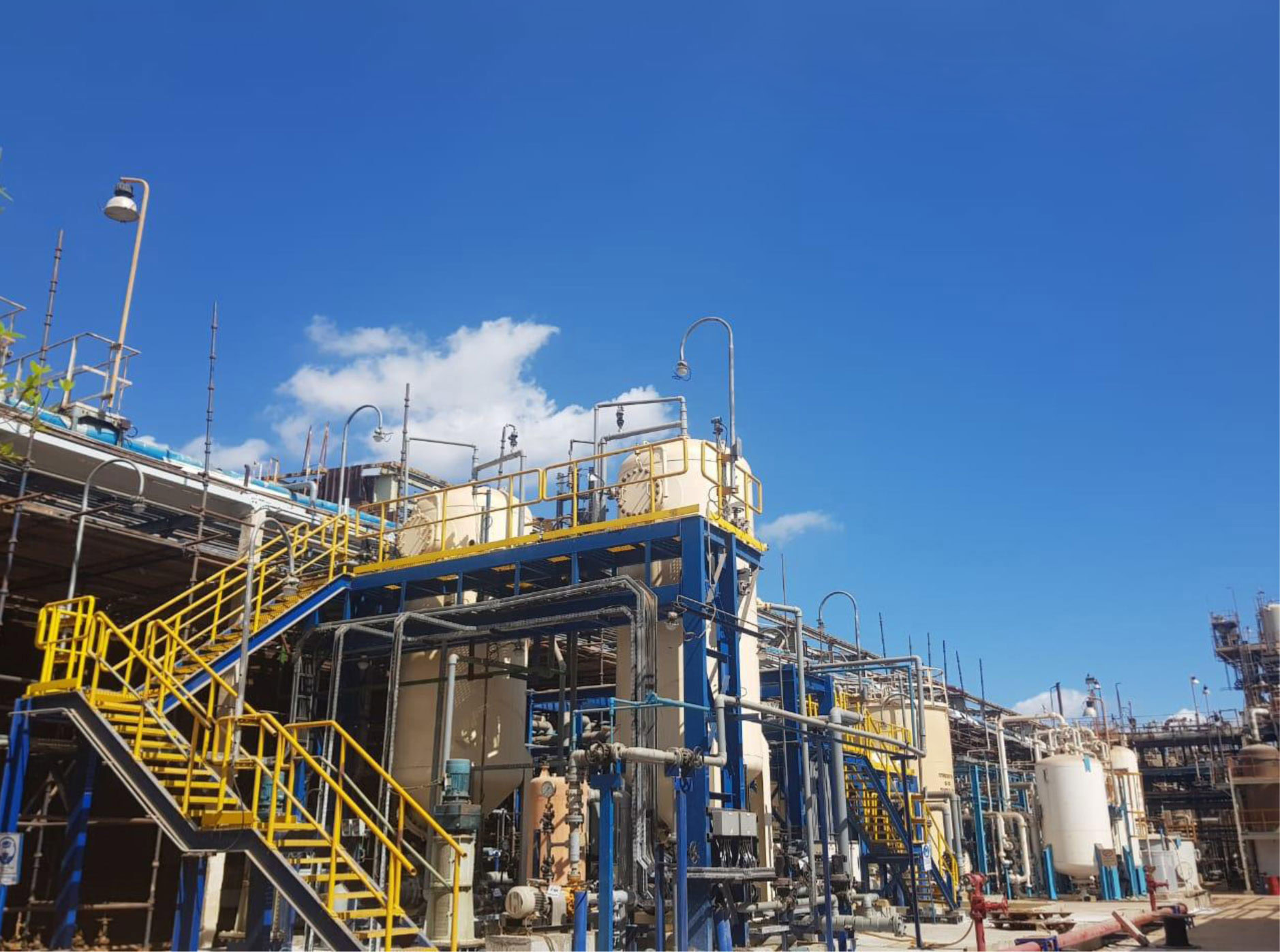 The technical adaptability of titanium anodes is the key to their penetration into multiple sub-sectors of the chemical industry. Whether in the process of electrosynthesis of sodium persulfate, where the catalytic selectivity is as high as 99% and the product purity is increased to 99.5%, or in metal foil electroplating, where the coating thickness deviation is controlled within ± 0.5 microns, titanium anodes demonstrate extremely high precision. In 2022, a multinational chemical enterprise comprehensively adopted a customized titanium anode system in its newly-built electronic-grade chemical factory, successfully controlling the concentration of key impurities at the level of one part per billion (ppb), meeting the strict specification requirements of the semiconductor industry for ultra-pure chemicals. This marks its irreplaceability in the high-end chemical field.
The rigid demand for safety and environmental compliance has further promoted the popularization of titanium anodes. In the face of increasingly strict environmental regulations, such as China's "dual carbon" goals, titanium anode technology offers a green solution. In the process of treating cyanide-containing wastewater, the cyanide-breaking efficiency of the titanium anode electrochemical oxidation method exceeds 99.9%, the treatment cycle is shortened by 50%, and there is no need to add dangerous chemicals such as sodium hypochlorite, completely eliminating the risks of transportation and storage. According to industry analysis, the global demand for Titanium anode in chemical industry is growing at an annual rate of approximately 6%, and it is expected that the market size will exceed 5 billion US dollars by 2028. This reflects its core value in supporting the sustainable development of the chemical industry and achieving a win-win situation of safety and efficiency.
The technical adaptability of titanium anodes is the key to their penetration into multiple sub-sectors of the chemical industry. Whether in the process of electrosynthesis of sodium persulfate, where the catalytic selectivity is as high as 99% and the product purity is increased to 99.5%, or in metal foil electroplating, where the coating thickness deviation is controlled within ± 0.5 microns, titanium anodes demonstrate extremely high precision. In 2022, a multinational chemical enterprise comprehensively adopted a customized titanium anode system in its newly-built electronic-grade chemical factory, successfully controlling the concentration of key impurities at the level of one part per billion (ppb), meeting the strict specification requirements of the semiconductor industry for ultra-pure chemicals. This marks its irreplaceability in the high-end chemical field.
The rigid demand for safety and environmental compliance has further promoted the popularization of titanium anodes. In the face of increasingly strict environmental regulations, such as China's "dual carbon" goals, titanium anode technology offers a green solution. In the process of treating cyanide-containing wastewater, the cyanide-breaking efficiency of the titanium anode electrochemical oxidation method exceeds 99.9%, the treatment cycle is shortened by 50%, and there is no need to add dangerous chemicals such as sodium hypochlorite, completely eliminating the risks of transportation and storage. According to industry analysis, the global demand for Titanium anode in chemical industry is growing at an annual rate of approximately 6%, and it is expected that the market size will exceed 5 billion US dollars by 2028. This reflects its core value in supporting the sustainable development of the chemical industry and achieving a win-win situation of safety and efficiency.
The technical adaptability of titanium anodes is the key to their penetration into multiple sub-sectors of the chemical industry. Whether in the process of electrosynthesis of sodium persulfate, where the catalytic selectivity is as high as 99% and the product purity is increased to 99.5%, or in metal foil electroplating, where the coating thickness deviation is controlled within ± 0.5 microns, titanium anodes demonstrate extremely high precision. In 2022, a multinational chemical enterprise comprehensively adopted a customized titanium anode system in its newly-built electronic-grade chemical factory, successfully controlling the concentration of key impurities at the level of one part per billion (ppb), meeting the strict specification requirements of the semiconductor industry for ultra-pure chemicals. This marks its irreplaceability in the high-end chemical field.
The rigid demand for safety and environmental compliance has further promoted the popularization of titanium anodes. In the face of increasingly strict environmental regulations, such as China's "dual carbon" goals, titanium anode technology offers a green solution. In the process of treating cyanide-containing wastewater, the cyanide-breaking efficiency of the titanium anode electrochemical oxidation method exceeds 99.9%, the treatment cycle is shortened by 50%, and there is no need to add dangerous chemicals such as sodium hypochlorite, completely eliminating the risks of transportation and storage. According to industry analysis, the global demand for Titanium anode in chemical industry is growing at an annual rate of approximately 6%, and it is expected that the market size will exceed 5 billion US dollars by 2028. This reflects its core value in supporting the sustainable development of the chemical industry and achieving a win-win situation of safety and efficiency.