Is Commercial Plywood Good for Furniture Production?
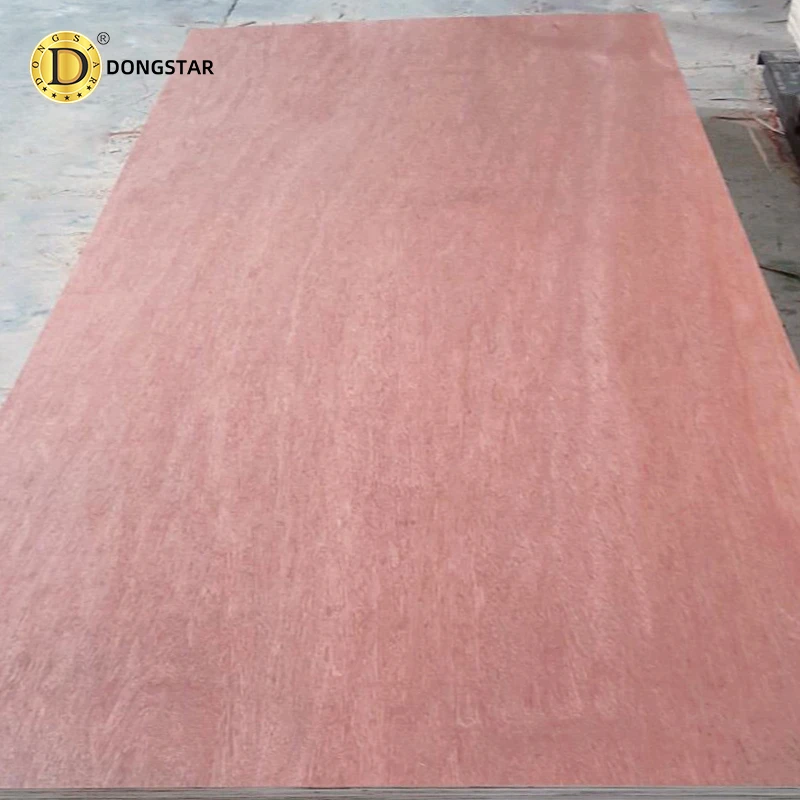
Yes. Commercial plywood can work well for furniture when the panel specification matches the finished product. An 18 mm cabinet panel, for example, may use 7, 9, or more veneer layers, while the same nominal thickness from another mill can contain fewer, thicker plies and larger internal gaps. European EN 314-2 separates plywood bonding into 3 classes: Class 1 for dry interiors, Class 2 for humid conditions, and Class 3 for exterior exposure. For European indoor products, E1 formaldehyde classification corresponds to no more than 0.1 ppm, or 0.124 mg/m³, under the EN 717-1 chamber method.
Furniture performance starts with how plywood is built. Veneers are normally arranged with neighboring grain directions at approximately 90°, reducing the directional movement found in a single piece of timber. The USDA Forest Products Laboratory has documented cross-lamination as a method for improving dimensional stability, while its Wood Handbook has covered plywood and other engineered wood products for decades, including editions published in 2010 and 2021.
That construction matters most on wide cabinet sides, long shelves, bed components, worktops, and wardrobe panels. A sheet measuring 1220 × 2440 mm provides about 2.98 m² of usable panel area before saw kerf, trimming, defects, and nesting waste are considered. Furniture factories commonly work with 9, 12, 15, and 18 mm panels because different parts do not need the same amount of material.
More thickness is not automatically better. In a cabinet, an 18 mm side panel may be reasonable while a back panel can use substantially less material. A shelf spanning 900 mm also behaves differently from one spanning 450 mm, even when both come from the same sheet. The USDA notes that, all else being equal, plywood stiffness and strength generally rise as panel thickness increases and as face and back veneer thickness increases.
The internal lay-up therefore deserves as much attention as the number printed on an invoice. A nominal 18 mm sheet with uniform veneers and few gaps may machine more predictably than another 18 mm panel with overlapping core veneers, open voids, or uneven glue spread. CNC routers, dowel drills, edge-banding lines, and automated boring equipment all depend on repeatable thickness.
For a factory processing 1,000 sheets in one production run, even a 2% rejection rate represents 20 sheets before labor, machining time, surface material, and hardware are counted. A purchase team comparing two offers should therefore record usable yield, not only price per cubic metre or sheet.
A practical incoming inspection can use a small sampling plan rather than inspecting every panel:
-
Check 10 sheets from different positions in the pack for thickness and flatness.
-
Cut at least 5 sample strips to expose internal veneer gaps and overlaps.
-
Drill and screw several offcuts using the production hardware.
-
Check face quality under the same lighting used by the finishing team.
-
Record moisture readings at several locations instead of testing only 1 sheet.
The next issue is moisture because furniture plywood does not operate in identical environments. EN 314-2 defines Class 1 for dry interior service, Class 2 for humid or protected exterior service, and Class 3 for exterior conditions. APA Europe describes Class 1 conditions around 20°C where relative humidity exceeds 65% for only a few weeks of the year; Class 2 allows relative humidity above 85% for only limited periods.
A dry bedroom cabinet can therefore have different bonding requirements from a bathroom vanity, utility-room cabinet, or furniture installed close to frequently wet floors. A moisture-resistant glue line does not make an unfinished plywood edge waterproof. Cut edges, drilled openings, sink cut-outs, joints, and uncoated backs still need suitable detailing when water exposure is expected.
Moisture also affects appearance. A 2004 USDA Forest Products Laboratory guide on veneered furniture and cabinetry identified moisture changes as a major cause of surface distortion, including veneer buckling and cracking. The same publication noted that moisture-related problems can develop after manufacturing, which is why conditioning panels before machining and storing them under controlled conditions matters.
Surface requirements then narrow the material choice further. A laminated cabinet carcass does not need the same face veneer as a clear-finished bookshelf. Small repairs and colour variation may disappear under HPL, decorative veneer, or an opaque coating, while the same marks can reject a panel intended for a visible natural finish.
Exposed edges place even more emphasis on the core. A designer showing the plywood layers may want regular veneer thickness and very few visible voids across every cut. A factory covering edges with 1 or 2 mm ABS still needs sound inner layers because hinge screws, dowels, confirmat-type fittings, and threaded inserts transfer force into the panel rather than into the decorative edge material.
Weight can also influence furniture engineering. Lower-density species are often selected where handling and transport matter, while denser hardwood plywood can provide different stiffness and fastening characteristics. Instead of buying by species name alone, furniture manufacturers can compare panel density by weighing a known sample volume; testing 10 specimens provides more useful production information than relying on one small sales sample.
For furniture made with okoume-faced or okoume-core panels, working with an experienced Okoume Plywood Supplier allows buyers to specify thickness, face grade, core construction, glue system, sanding, panel dimensions, and packing around the intended product. Species identification still needs to be considered together with veneer quality and manufacturing consistency rather than treated as a complete grade by itself.
Formaldehyde performance requires similar precision. Under the European definition referenced in EN 13986, E1 panels tested according to EN 717-1 correspond to a steady-state chamber concentration of no more than 0.1 ppm, equivalent to 0.124 mg/m³ after 28 days. Alternative methods and limits can also apply under the standard, so buyers should read the test method shown on the report rather than comparing an isolated “E1” label.
Compliance documentation becomes more relevant when plywood enters European distribution or furniture supply chains. A buyer may need information on product performance, timber sourcing, chain of custody, emissions, or structural conformity depending on the panel and its declared use. Documents should match the supplied product, manufacturing site, applicable standard, and validity period instead of being treated as general company paperwork.
Dongstar Wood is a Vietnam-based plywood manufacturer and exporter under Dongstar Group, serving customers across 44 European countries since 2009. We specialize in commercial plywood, film faced plywood, construction plywood, birch plywood, furniture plywood, and customized plywood solutions.
Backed by CE 2+, FSC®, EUDR, DOP, and SEDEX (BSCI) certifications, we meet European standards for quality, sustainability, and compliance. With over 15 years of manufacturing and export experience, we support importers, distributors, furniture manufacturers, and construction companies with reliable plywood supply and OEM/ODM solutions.
Machining trials are still useful after documentation has been checked. A furniture factory can take 20 representative panels and run the same cutting, drilling, routing, sanding, edge-banding, and assembly sequence planned for production. Measurements can include thickness variation, chipped veneer, edge void frequency, warped panels, screw failures, rejected parts, and processing time per component.
Comparing plywood with MDF also requires looking at the finished component rather than the raw board alone. MDF offers a uniform fibre structure that works well for routed profiles and smooth painted surfaces, while plywood retains layered veneers and directional wood fibres. For a painted shaker-style door, MDF can simplify profiling; for a structural cabinet side or furniture frame, plywood may better fit the fastening and weight requirements.
Particleboard creates another comparison. It is widely used in laminated furniture because sheet consistency and industrial surface finishing can work efficiently in large production programs. Plywood may be selected where a manufacturer wants a veneer-based panel, stronger edge fastening, lower damage around some mechanical joints, or a different weight profile. A factory using 50,000 components per year should compare the reject percentage and finished-component cost rather than board price alone.
Panel yield can materially change that comparison. Assume a 1220 × 2440 mm sheet produces 12 cabinet parts under one nesting pattern. A 5% material-loss difference across 10,000 sheets is equivalent to 500 sheets of purchased panel area. Saw kerf, trim allowance, defect positioning, grain direction, part rotation, and required face orientation can all change the final number.
Packaging also deserves specification because flat plywood can arrive warped or edge-damaged after poor handling. Packs should support panels evenly, protect corners and faces, and limit direct moisture exposure during storage and transport. USDA guidance on wood moisture notes that wood products remain responsive to surrounding humidity and that seasonal moisture changes can be more significant than daily changes.
A purchasing specification can therefore be short but measurable: 18 mm nominal thickness, agreed dimensional tolerance, specified face/back grade, stated core construction, EN 314-2 bonding class, required emission class, acceptable moisture range, sanding requirement, panel size, permitted repairs, packing method, and required documents. The mill should be able to reproduce the agreed sample in later batches, not merely produce one good approval panel.
Before a larger order, 20–30 full sheets from a representative production batch can provide enough material for cutting trials, assembly tests, finishing checks, and internal comparison with the factory's current board. Record the results beside the purchase specification, then use the same measurements during later deliveries. That gives furniture manufacturers a repeatable basis for choosing commercial plywood across cabinets, wardrobes, shelving, desks, beds, and upholstered furniture frames without relying on the broad “commercial plywood” name alone.